


AI video highlight detection: How it works, and why speech-first detection is more reliable
Discover how modern AI clip makers analyze speech, context, and structure to surface stronger highlights faster and with less noise.
You finish a two-hour stream. You know there were strong moments. Now you have to find them.
So you scrub. Fast forward. Rewind. Watch at 1.5x speed. Repeat.
Finding one clean 30-second clip can take longer than recording the stream itself. This manual review is the real bottleneck in content repurposing.
To keep up with the demands of short-form video, creators need to work smarter, not harder. The solution is the shift from manual scrubbing to AI-driven clip discovery. This article explores how AI video highlight detection works and why a speech-first approach is more reliable for generating clips that people actually want to watch.
Why Restream prioritizes semantic speech analysis
Early AI clippers relied heavily on visual signals. They looked for scene cuts, fast motion, or sudden changes in the frame. The underlying assumption was that movement signals engagement.
In practice, motion rarely guarantees meaning. A hand gesture, a camera adjustment, or a quick visual shift does not automatically create a compelling moment.
Restream’s approach starts with speech instead of visual cues, focusing on what is actually being communicated.
Semantic speech analysis means the system evaluates the meaning and structure of what is spoken. It identifies:
- Clear takeaways
- Strong opinions
- Punchlines
- Questions that hook attention
- Emotionally charged language
- Complete narrative arcs
By prioritizing spoken context, Restream Clips can pinpoint the moments that truly resonate with an audience, so the clips it generates are more substantive and shareable.
Why visual-only detection often fails
Relying solely on visual data is a flawed strategy because it mistakes motion for meaning. Imagine a streamer simply adjusting their camera or taking a sip of water. A visual-only AI might flag this as a "highlight" because of the movement, leading to a library of useless clip suggestions.
This creates a lot of noise. Creators are left with low-quality clips that lack context or value, forcing them back into the manual review process the AI was supposed to eliminate. Visual data is important, but without the guidance of speech analysis, it often leads to what we call "hallucinated highlights" or clips that misrepresent a moment.
How Restream’s AI Clipper synchronizes voice and vision analysis
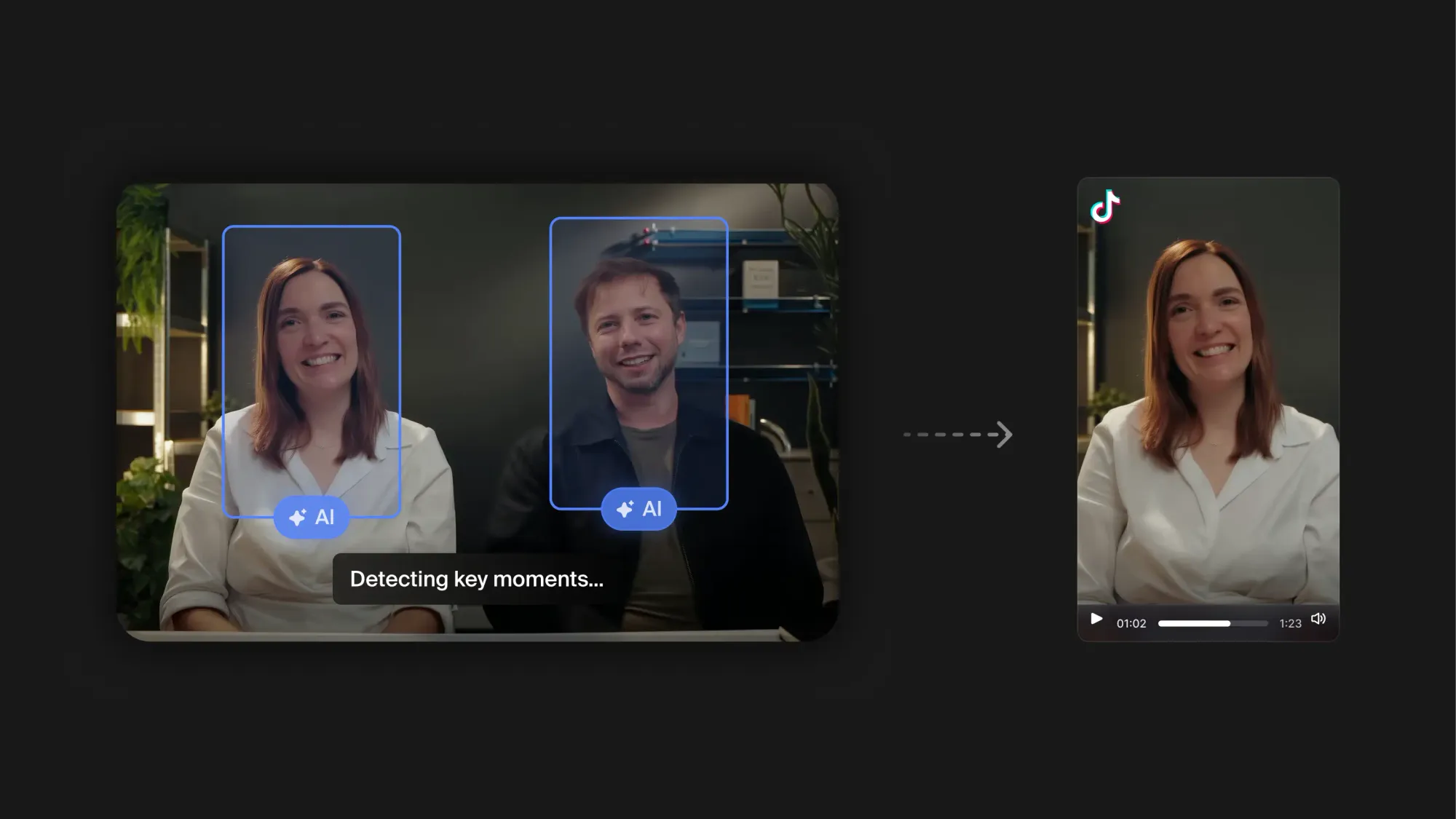
The most effective AI clip maker analyzes voice and vision together to identify highlights. That’s why Restream Clips uses speech as the "brain" to find the moment and visual AI as the "eyes" to frame it perfectly. This synchronized approach delivers clips that are on point and visually polished.
Our AI transcribes the entire stream and analyzes the text and vocal delivery for cues. It looks for moments of high energy, laughter, or sentences that form a compelling narrative hook. Once a strong verbal moment is identified, visual AI steps in to optimize presentation.
Intelligent speaker tracking
The visual AI ensures the active speaker remains centered in the vertical (9:16) and other layouts. If you move around while talking, the frame follows you. This removes the need for manual reframing while keeping clips platform-ready.
Contextual B-roll
Because the AI "listens" to the conversation, it can suggest or overlay relevant B-roll that matches the topic being discussed. This makes the video more engaging and helps maximize viewer retention, a critical factor for success on short-form platforms.
By aligning the audio and visuals, Restream Clips creates clear, ready-to-publish content.
Precision tuning via verbal cues
Speech-first detection allows for fine-grained accuracy. Restream’s AI is trained to identify specific verbal patterns that signal a great clip:
- Hook sentences that grab attention in the first few seconds
- Verbal peaks in volume, pace, or emphasis
- Clear conclusions that complete a thought
This focus on language dramatically reduces the number of hallucinated highlights and delivers suggestions that have a clear beginning, middle, and end.
Validating your AI clips with data
Many AI tools surface a “virality score,” but without context, it’s hard to act on.
A more useful way to think about it is as a predictive layer built on patterns from millions of high-performing social posts. Instead of guessing, the system evaluates how closely a clip matches formats that already drive strong retention and sharing.
Under the hood, the AI “listens” for speech cues that tend to hold attention, like a clear hook early on and a complete idea that lands without extra context. It also looks for hook points tied to retention and shareability, such as contrast phrases, specific claims, and moments where the viewer has a reason to keep watching.
Retention is still the reality check, though. Watch for how long people stay, whether they finish the clip, and whether they share it.
Reviewing which clips actually perform closes the loop. It helps you see where the predictions were right and where they missed. Use that performance data to refine what you publish and improve the AI’s future selections.
Technical capabilities and suitability
Speech-first detection works especially well for dialogue-driven content such as:
- Podcasts
- Interviews
- Webinars
- Educational sessions
- Commentary streams
It’s important to set the right expectations: AI clip makers are not a replacement for creative judgment. Think of them as a high-speed, tireless assistant that handles the most repetitive parts of the editing process. You stay in control of final edits and publishing decisions.
Restream Clips includes a built-in professional editor that allows you and your team to adjust timing and refine each clip before publishing.
Ultimately, the goal is to free you from the time-consuming task of hunting for clips so you can focus on creating great content. By letting a smart, speech-driven AI handle the initial discovery, you can repurpose your content at scale and grow your audience faster.
Wrapping up
Scrubbing through hours of footage to find one usable clip does not scale. As your content library grows, manual review becomes a recurring time cost that slows publishing and limits output.
Speech-first AI highlight detection changes that. By focusing on what is said, it surfaces moments that carry meaning, structure, and context.
If your content relies on conversation, insight, or explanation, a speech-driven AI clip maker will consistently deliver stronger results than a visual-only system. Instead of searching for highlights, you can focus on refining and publishing them.
Ready to stop scrubbing and start scaling? Try Restream Clips today.
On this page